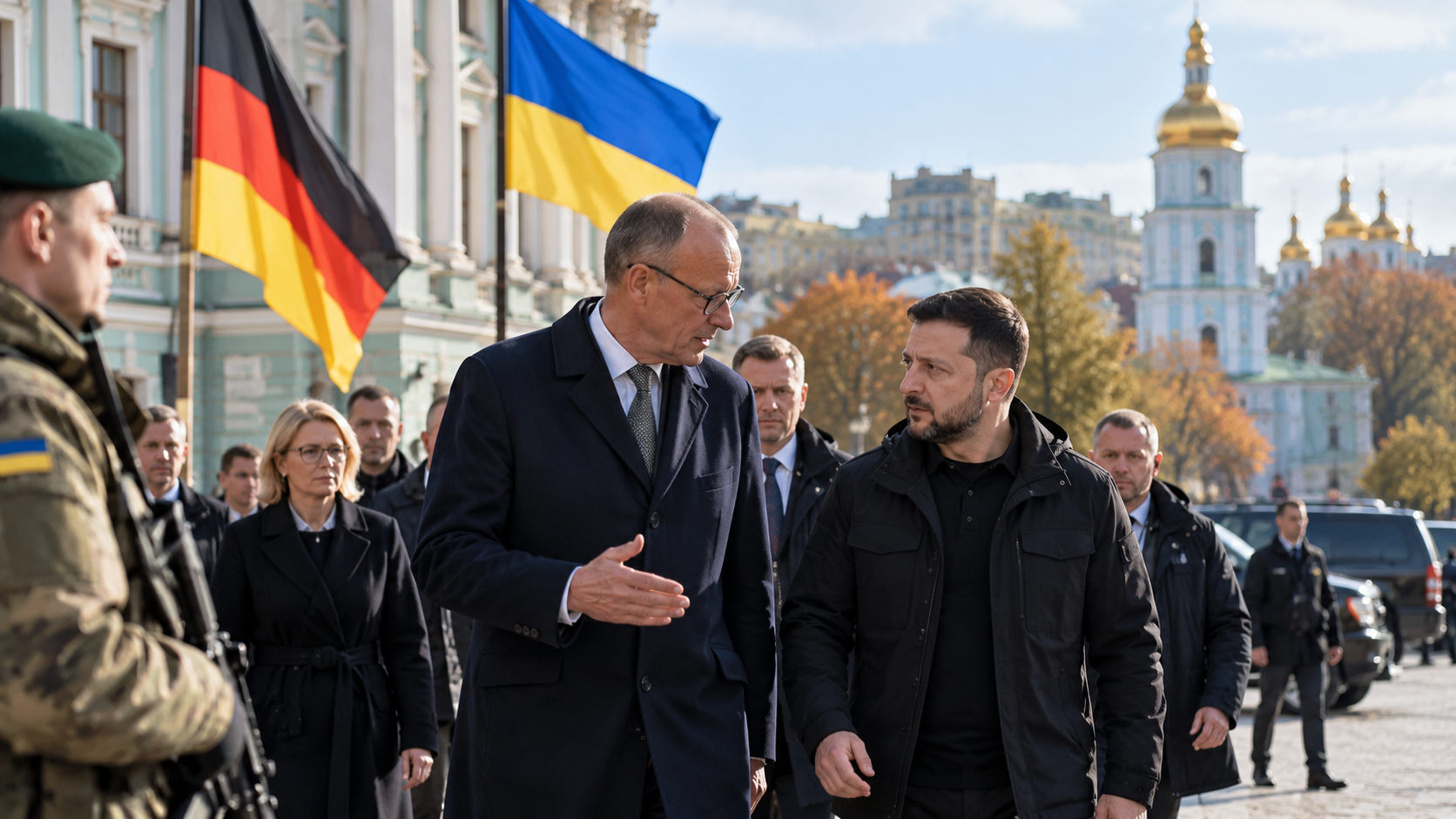
German Chancellor Friedrich Merz is calling on all 27 European Union members to share the cost of additional support for Ukraine, making a collective funding commitment a condition for agreement on the bloc’s next long-term budget.
In a letter to European Council President António Costa, Merz points to an estimated €70 billion financing gap in Ukraine’s 2027 budget. The EU is expected to cover about €45 billion of that amount, although the mechanism for providing the money has not yet been settled.
The bloc had previously agreed to a €90 billion support loan for 2026 and 2027. The prolonged war and the additional costs caused by Russian attacks have increased Kyiv’s funding needs. Merz wants the next EU budget, covering 2028 to 2034, to provide a stable multi-year financing framework for Ukraine from 2028 onwards, including the interest liabilities already accumulated on existing support.
The German chancellor has asked for Ukraine financing to be treated as a priority at the informal meeting of EU leaders in Dublin on Friday, 13 November. A special summit on the bloc’s 2028-2034 budget negotiations is scheduled for 26 and 27 November.
The proposal has exposed divisions among member states. Slovak Prime Minister Robert Fico has rejected linking Ukraine assistance to the EU budget. Hungary, Slovakia and the Czech Republic have indicated that they do not intend to join another round of common borrowing, while Bulgaria is also expected to resist taking part.
The dispute centres on how the EU should share the financial burden of supporting Ukraine and whether that commitment should become a lasting part of the bloc’s next multiannual financial framework. Merz argues that the costs should not continue to fall mainly on a small group of countries.