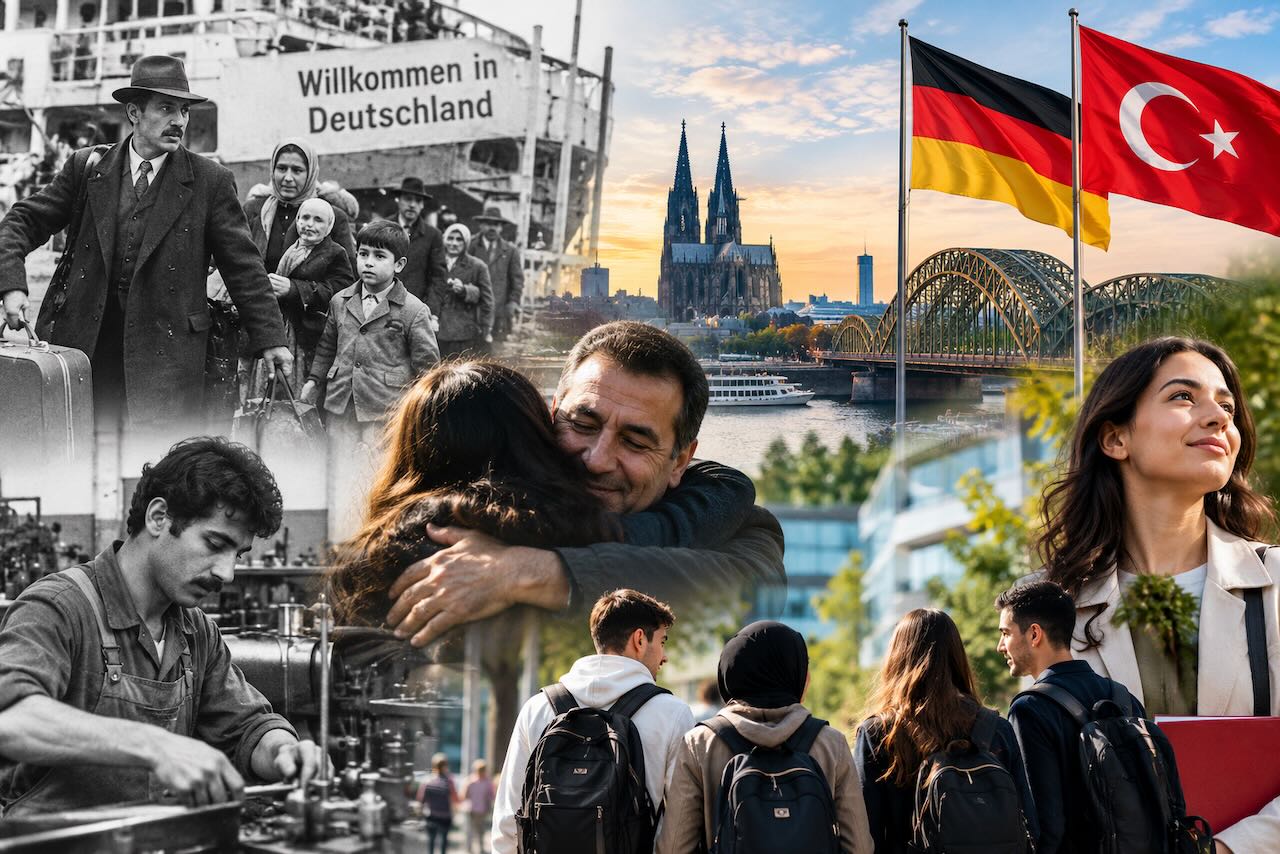
COLOGNE – On 30 October 1961, West Germany and Turkey signed a labour recruitment agreement intended to bring Turkish workers to Germany for a limited period. Six and a half decades later, that agreement stands at the beginning of a multigenerational migration story that has helped shape Germany’s economy, culture and society.
Figures released by Germany’s Federal Statistical Office (Destatis) on 29 October 2026 show that around 2.648 million people with a Turkish immigration history lived in Germany in 2025. Approximately 1.5 million had migrated from Turkey themselves, while about 1.2 million were born in Germany. Some 48 per cent of people in this group held German citizenship.
From temporary labour to permanent settlement
The agreement was signed during West Germany’s post-war economic expansion, when employers needed additional workers. Many of the first recruits were young men employed in industry and other physically demanding jobs. Their stay was initially expected to be temporary, but family reunification, further migration and the decision of many workers to remain transformed the arrangement into a lasting part of Germany’s social history.
The Federal Agency for Civic Education says about 870,000 workers from Turkey arrived in West Germany between the 1961 agreement and the recruitment stop in 1973. Over time, the story expanded beyond employment to include family life, education, housing, culture and participation in public life.
A society shaped by several generations
People with Turkish roots now work across manufacturing, services, education, healthcare, science, culture, sport, media and politics. For many people born in Germany, the country is home. Yet debates over equal opportunities, recognition of qualifications and discrimination remain part of public discussion.
Destatis reports that people born in Turkey who lived in Germany in 2025 had spent an average of 32.4 years in the country. Family-related reasons, including family reunification and starting a family, were the main stated reason for migration for nearly two-thirds of those born in Turkey. Employment was the main reason for 15 per cent, while 10 per cent cited flight, asylum or international protection.
North Rhine-Westphalia at the heart of the story
North Rhine-Westphalia is home to the largest share of people with a Turkish immigration history. According to Destatis, 32 per cent of this population lived in NRW in 2025. Cologne and the region’s industrial history, including the Ford plants, are closely linked to labour migration. Today, family businesses, associations, cultural initiatives and the experiences of different generations form part of everyday life across the state.
The 65th anniversary is therefore not only a moment to look back at the first recruited workers. It is also an opportunity to consider how their work and the lives built by their families have become part of contemporary Germany, while ties between Germany and Turkey continue to evolve.
Sources: Federal Statistical Office of Germany (Destatis), 29 October 2026; Federal Agency for Civic Education (bpb), 28 October 2026.